
Medically Reviewed by: ,
You’ve noticed your cat licking the same spot over and over — and now there’s a bald patch where fur used to be. You’re watching them work at their belly or legs obsessively, and you’re right to want answers.
Left untreated, the underlying cause — whether it’s fleas, allergies, or stress — can worsen, leading to raw, infected skin that requires more intensive veterinary treatment. The good news is that most cat overgrooming causes are treatable once identified.
Quick Answer: Cat overgrooming causes include parasites (fleas, mites), skin allergies (food or environmental), pain from arthritis or urinary issues, fungal or bacterial infections, and stress-driven behavioral compulsion (Psychogenic Alopecia). A veterinarian must diagnose the specific cause before treatment. This guide walks you through each step.
In this guide, you’ll learn to recognize the signs of overgrooming, identify whether the cause is medical or behavioral, and take clear action — including knowing exactly when to call a vet. We follow three steps: recognize the signs → identify the cause → take action.
Cat overgrooming causes are most commonly medical — a clinical study found 76% of cats initially assumed to have stress-driven overgrooming actually had an underlying medical condition (PubMed/JAVMA, 2006).
- Medical causes are most common: Fleas, allergies, pain, and infections are the top culprits
- The Medical-First Rule: Always rule out physical causes before treating behavior
- Behavioral causes (Psychogenic Alopecia) are real but are a diagnosis of exclusion — meaning every medical cause must be eliminated first
- Home remedies help with stress — but only after your vet rules out medical causes
- Red flag: Bald patches, red/raw skin, or licking one spot obsessively = vet visit needed
Recommended Products
| # | Image | Product | Best For | Buy |
|---|---|---|---|---|
| 1 |  |
Aumuca Cat Brush for Shedding | Short & long-haired cats | Buy on Amazon |
| 2 |  |
SleekEZ Deshedding Cat Brush | Shedding & undercoat removal | Buy on Amazon |
| 3 |  |
2-in-1 Deshedding & Dematting Set | Matted, tangled fur | Buy on Amazon |
| 4 |  |
QYANGG Scratch-Resistant Grooming Gloves | Scratch protection grooming | Buy on Amazon |
| 5 |  |
SKOUT’S HONOR Hydrating Grooming Wipes | Dry skin & coat hydration | Buy on Amazon |
| 6 |  |
Extra Long Pet Grooming Gloves | Sensitive cats, massage | Buy on Amazon |
| 7 |  |
oneisall Quiet Cordless Cat Clippers | Matted or long hair | Buy on Amazon |
| 8 |  |
Professional 5-in-1 Grooming Clipper | Full grooming at home | Buy on Amazon |
What You Need to Know Before You Start
- Estimated Time: 10–15 minutes (for initial coat check and symptom observation)
- What You Need:
- A well-lit room
- A calm, relaxed cat
- A quality deshedding brush (optional, to check coat health)
Grooming is completely natural for cats. Healthy cats spend between 30–50% of their waking hours grooming themselves — cleaning their coats, regulating body temperature, and removing loose fur and debris. That is a lot of licking, and it is entirely normal. Before you can judge whether your cat’s behavior is a problem, you need to know what “normal” actually looks like.
Overgrooming crosses a clear line: it becomes compulsive, targets one specific area repeatedly, and — most importantly — causes visible damage. Normal grooming leaves a clean, full coat. Overgrooming leaves bald patches, broken hairs, or red, irritated skin.
Is My Cat’s Grooming Normal or Excessive?
Cats that groom are healthy cats. The question is not whether they groom, but what the results look like. If you can see your cat’s skin through the fur — especially on the belly or inner legs — that is overgrooming, not normal coat maintenance.
The clearest signs that grooming has become excessive include: visible thinning or bald patches, skin that looks red or raw, or a sudden increase in hairballs (which means your cat is swallowing more fur than usual). The Cornell Feline Health Center notes that psychogenic alopecia is often triggered by psychological stress, but vets must first rule out medical causes like parasites, allergies, or fungal infections — a principle this guide calls The Medical-First Rule.
Before we explore cat overgrooming causes in detail, keep that rule in mind: physical causes must be ruled out first. This section does not replace a professional veterinary diagnosis — it gives you the baseline knowledge to have a better conversation with your vet.
Now that you know what “too much” looks like, the next step is learning to identify the specific signs — because the type and location of hair loss are important clues to the cause.
Step 1: Recognize the Signs of Cat Overgrooming
Cat overgrooming is visible as bald patches, thinning fur, or red irritated skin — usually in areas your cat can easily reach with their tongue. Cats normally spend 30–50% of their waking hours grooming, so the key warning sign is not how much they groom, but what the fur and skin look like afterward. Spotting these signs early gives you and your vet the best chance of a quick, effective diagnosis.
Imagine settling in for a cuddle and running your hand along your cat’s belly — and feeling stubble instead of soft fur. That moment of surprise is exactly what many worried owners describe. You’re not overreacting. A change in coat texture or density is your cat’s way of telling you something is wrong.
What Overgrooming Looks Like: Physical Signs to Watch For
Knowing what to look for — and what to call it — helps you describe the problem accurately to your vet. Here are the key physical signs:
- Bald patches: Circular or symmetrical areas of missing fur, often with sharp edges. Unlike natural shedding (which is diffuse and even), overgrooming bald patches have clear boundaries. They appear most often on the belly, inner thighs, or base of the tail.
- Barbering: This is when a cat chews fur down to the skin rather than pulling it out. The remaining coat looks “mowed” or stubbly, and the texture feels rough when you stroke against the grain.
- Skin changes: Redness, darkened or thickened skin — known as hyperpigmentation (when repeated licking causes the skin to darken over time) — open sores, or scabs. These indicate the licking has progressed to the point of causing physical damage.
- Increased hairballs: An unusual rise in hairballs can signal that your cat is ingesting far more fur than normal — a direct result of compulsive licking.
To check at home right now: run your hand gently against the grain of your cat’s fur on the belly and inner legs. If you feel stubble, see pink skin, or notice an asymmetrical thinning pattern, that is a sign of overgrooming — not normal shedding. Overgrooming resulting in hair loss and skin irritation is a key clinical indicator requiring veterinary assessment (Cornell Feline Health Center).
Regular grooming sessions with a quality deshedding brush — such as the Aumuca Cat Brush or SleekEZ Deshedding Brush — help you monitor your cat’s coat health week to week, making early changes much easier to catch.
Where Cats Overgroom Most: Belly, Legs, and Beyond
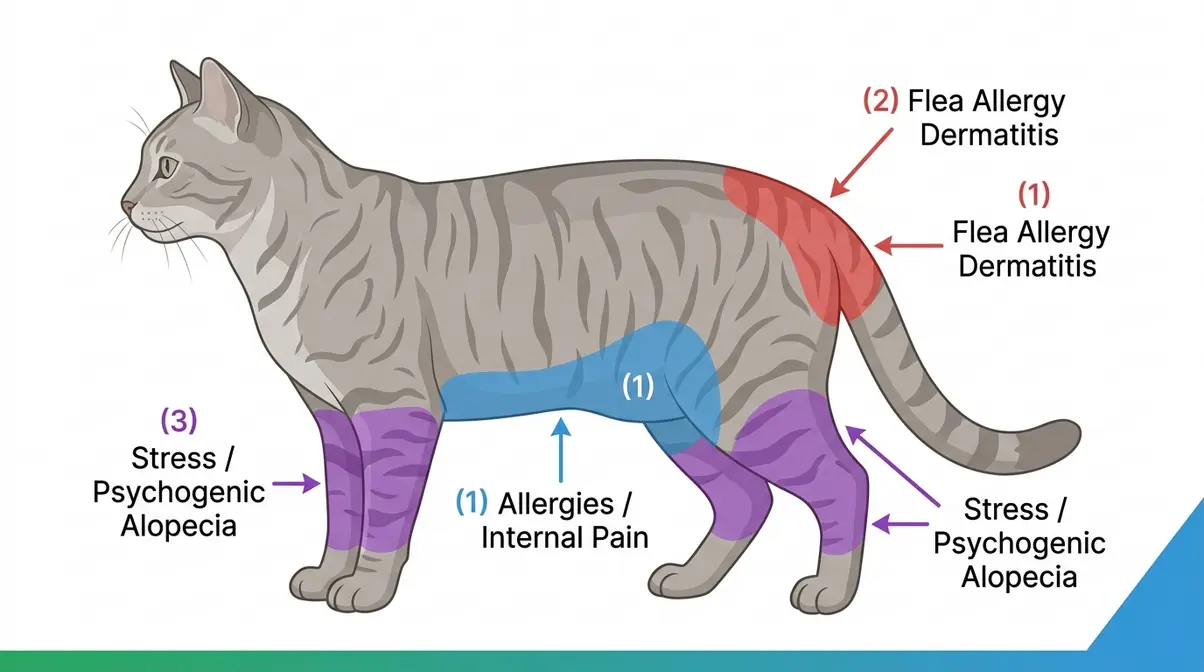
Cats that overgroom specific body areas — especially the belly and inner legs — are giving owners a location-based clue about the underlying cause (Texas A&M Veterinary Medicine). This is one of the most underused diagnostic insights available to owners, and no simple web search will give it to you this clearly.
Here is what each location suggests:
- Belly and inner thighs: The most common overgrooming location. Associated with allergies (food or environmental), flea allergy dermatitis, and internal discomfort such as urinary tract issues or arthritis. If your cat is over grooming belly and legs simultaneously, allergies or internal pain are strong possibilities worth discussing with your vet. Texas A&M Veterinary Medicine identifies this pattern as a primary clinical indicator.
- Front and back legs: Overgrooming on the legs — particularly cat overgrooming legs and front legs — is frequently linked to stress and anxiety, a condition called Psychogenic Alopecia (the medical term for stress-driven compulsive overgrooming in cats). Some cats self-soothe by licking their legs, in much the same way humans bite their nails when anxious.
- Base of tail and lower back: A classic location for flea allergy dermatitis. If you see hair loss concentrated near the tail base, fleas or flea dirt should be your very first check. Part the fur and look for tiny dark specks — that is flea dirt (digested blood), and it confirms parasite activity.
Understanding where the licking is happening narrows down the cause before you even reach the vet’s office.
Symptom Checker: Is It Overgrooming or Something Else?
Not every bald patch means overgrooming. Ringworm (a fungal infection), mange, and hormonal imbalances can all cause hair loss without the cat licking excessively. The key distinction: if you witness the cat licking or chewing the affected area, it is almost certainly overgrooming. If the hair loss appears without any observed licking behavior, a fungal or hormonal cause is more likely.
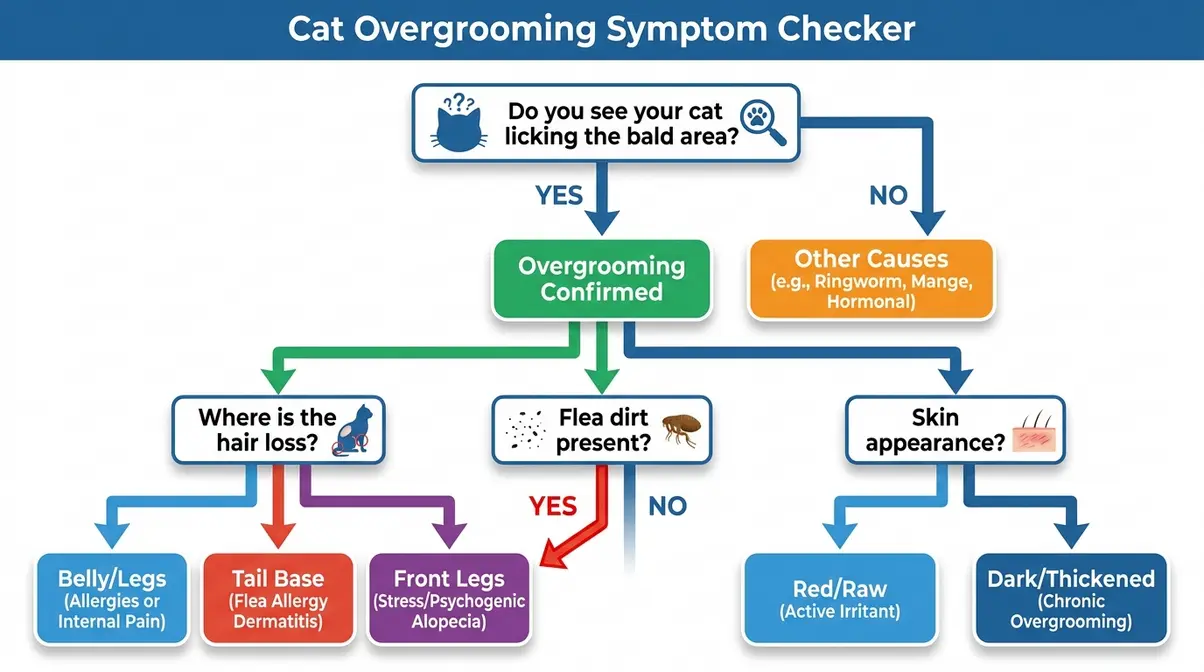
Step 2: Identify the Root Cause
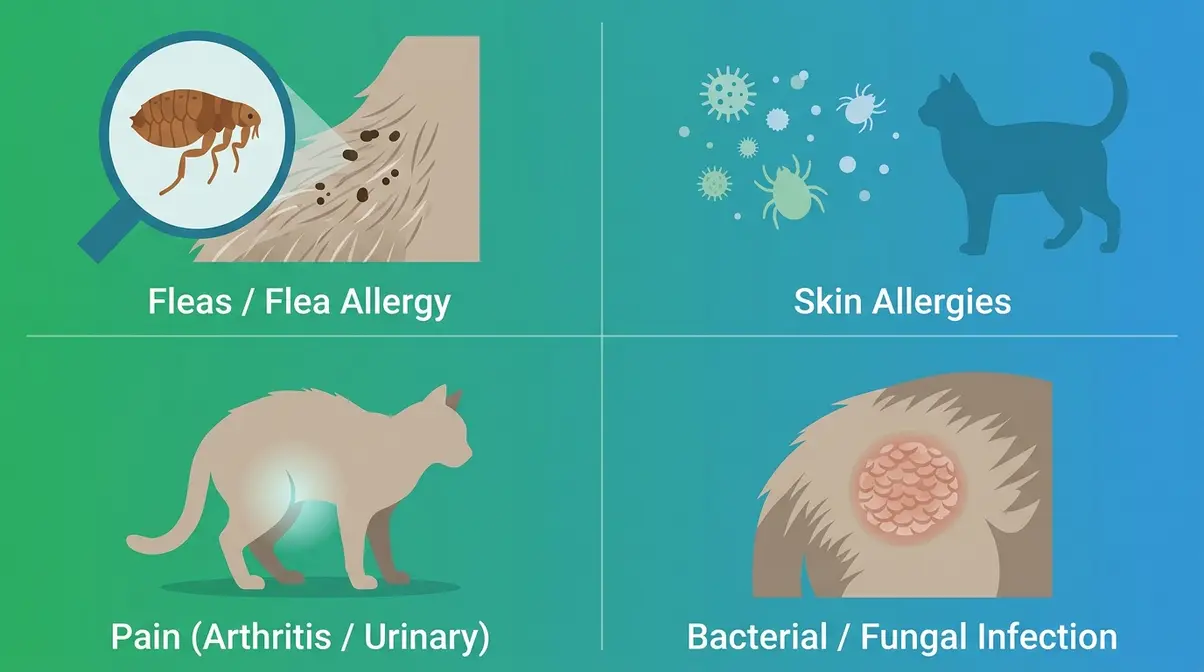
A clinical study found that 76% of cats initially assumed to have stress-driven overgrooming actually had an underlying medical condition (PubMed/JAVMA, 2006). That single statistic is the foundation of The Medical-First Rule: before you try any home remedy or behavioral intervention, physical causes must be ruled out first. This is not just good practice — it is the difference between treating the symptom and resolving the actual problem.
This step walks you through the most common medical causes, the behavioral causes, and a less-discussed but important condition called Feline Hyperesthesia Syndrome. Understanding the causes of cat overgrooming helps you partner effectively with your vet.
Why is my cat overgrooming and losing fur?
Your cat is losing fur because the repetitive licking or chewing is physically removing hair faster than it can regrow. The most common cat overgrooming causes include flea allergy dermatitis, food or environmental allergies, internal pain (arthritis, urinary tract inflammation), bacterial or fungal skin infections, and stress-driven Psychogenic Alopecia. Location matters: over grooming belly and legs typically points to allergies or internal pain, while hair loss at the tail base strongly suggests fleas. A veterinarian can identify the specific cause through a structured diagnostic process.
Medical Causes of Cat Overgrooming (The Most Common Culprits)
Medical causes account for the majority of overgrooming cases. Here are the most common, along with what to look for:
1. External Parasites (Fleas and Mites)
Fleas are the single most common cause of overgrooming. Even one flea bite can trigger an intense allergic reaction in sensitive cats — called flea allergy dermatitis — causing relentless licking, especially at the tail base and belly. Mites (including ear mites and mange-causing Sarcoptes mites) cause similar intense itching. Check for flea dirt by parting the fur over the lower back and belly: tiny dark specks that turn reddish-brown when wet confirm flea activity. External parasites like fleas and mites are the first thing any vet will rule out (iCatCare).
2. Skin Allergies — Environmental or Food
Allergies are the second most common medical cause. Environmental allergies (also called atopic dermatitis) are reactions to pollen, dust mites, mold, or household cleaning products. Food allergies are reactions to a protein in your cat’s diet — most commonly chicken, beef, or fish. Both types cause intense, widespread itching that drives compulsive licking. The belly and inner legs are the most affected areas. Veterinary consensus indicates that distinguishing between environmental and food allergies requires professional testing — you cannot reliably identify a food allergy at home without a strict elimination diet supervised by a vet (Royal Canin Veterinary Academy).
3. Pain (Arthritis, Urinary Issues, Dental Pain)
Cats instinctively lick areas of their body that are painful or uncomfortable — even if the pain is internal. A cat with cystitis (bladder inflammation) may lick obsessively at their lower belly. A cat with hip arthritis may lick their hindquarters. This is one of the most frequently missed cat overgrooming causes, because the licking looks behavioral but the trigger is entirely physical. If your cat is licking their belly and also seems stiff, reluctant to jump, or is straining in the litter box, pain should be high on your list.
4. Bacterial or Fungal Infections
Skin infections (bacterial pyoderma) and fungal infections (ringworm — despite the name, a fungus, not a worm) cause itching and irritation that drives licking. Ringworm typically presents as circular patches of hair loss with a scaly border. These require prescription antifungal or antibiotic treatment — over-the-counter products will not resolve them.
| Medical Cause | Primary Location | Key Sign |
|---|---|---|
| Fleas / Flea Allergy | Tail base, belly | Flea dirt; intense scratching |
| Food Allergy | Belly, inner thighs | Year-round itching, no seasonal pattern |
| Environmental Allergy | Belly, face, paws | Seasonal pattern; watery eyes |
| Pain (internal) | Belly, lower back | Licking without scratching; behavior changes |
| Bacterial / Fungal Infection | Localized patches | Scaly skin; circular bald edges |
Behavioral Causes: When Stress Drives the Licking
When every medical cause has been ruled out, the diagnosis may be Psychogenic Alopecia — the medical term for stress-driven compulsive overgrooming. This is a real and recognized condition, but it is a diagnosis of exclusion, meaning a vet must eliminate all physical causes before concluding that stress is the driver.
Common stress triggers include: a new pet or baby in the home, a change in routine, moving house, construction noise, loss of a companion animal, or boredom from under-stimulation. Cats are creatures of habit, and even subtle environmental shifts can tip a sensitive cat into compulsive self-grooming as a coping mechanism.
“Over grooming can often be caused by either external parasites like fleas, mites, allergies either environmental or food, or some cats will groom compulsively due to stress — but you need a vet to tell you which one it is.”
The behavioral pattern typically presents as licking fur off in symmetrical patterns on the belly and inner legs — the same areas a cat can easily reach — without the redness or skin damage that a parasite or allergy would cause. However, chronic behavioral overgrooming can eventually cause skin damage, so early intervention still matters (Purina).
Feline Hyperesthesia Syndrome: A Less Common but Important Cause
Feline Hyperesthesia Syndrome (FHS) — sometimes called “rolling skin disease” — is a neurological condition characterized by episodes of extreme skin sensitivity, muscle rippling along the back, frantic licking or biting at the tail and lower back, dilated pupils, and sudden bursts of frantic behavior. It is less common than allergies or parasites, but it is important to know about because it is frequently mistaken for behavioral overgrooming or a flea problem.
FHS episodes are typically brief (seconds to minutes) but intense. Cats may cry out, appear disoriented, or suddenly attack their own tail. If you observe these signs — especially the characteristic skin-rippling — mention them specifically to your vet. Diagnosis requires ruling out other causes, and management may involve anti-anxiety medications, environmental modification, or in some cases anti-epileptic drugs under veterinary supervision.
The iCatCare resource on overgrooming provides a useful overview of how FHS fits within the broader diagnostic picture.
Step 3: Home Remedies and Vet Visits
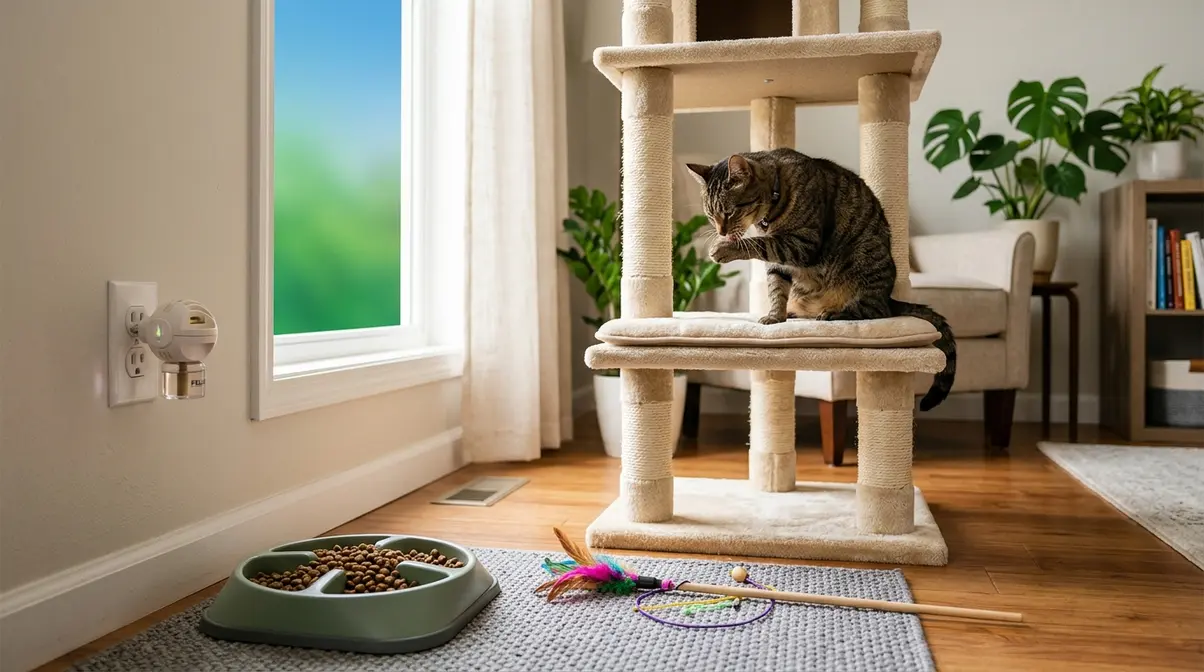
Once you’ve observed the signs and have a working theory about the cause, it’s time to act. This section covers what you can safely do at home for stress-related overgrooming, what to avoid, what happens at the vet’s office, and the red flag signs that mean you should call today — not next week.
What to give a cat for overgrooming?
Never give your cat any medication or supplement without veterinary guidance. For stress-related overgrooming specifically, veterinary-approved options include: Feliway Classic pheromone diffusers (plug-in, used for 30+ days), calming supplements such as Zylkene (alpha-casozepine) or L-theanine products, and — in more severe cases — prescription anti-anxiety medications like fluoxetine prescribed by your vet. Environmental changes (puzzle feeders, vertical territory, two daily play sessions, hiding spots) are equally important. For medical causes, treatment depends entirely on the diagnosis: antiparasitic treatment for fleas, hypoallergenic diet trials for food allergies, or pain management for arthritis.
7 Safe Home Remedies for Stress-Related Overgrooming
These remedies apply only after a vet has ruled out medical causes. Applying stress-reduction strategies to a cat with undiagnosed fleas or a food allergy will not help — and may delay proper treatment. With that caveat clearly stated, here are seven specific, evidence-supported strategies for stress-related overgrooming:
1. Feliway Classic Diffuser (Synthetic Pheromone Therapy)
Feliway mimics the natural facial pheromone cats deposit when they rub their face on objects — a signal of safety and familiarity. Plug a diffuser into the room where your cat spends the most time. Veterinary behaviorists recommend a minimum 30-day trial before assessing effectiveness. This is one of the most evidence-backed non-pharmaceutical interventions for feline anxiety.
2. Puzzle Feeders and Food-Dispensing Toys
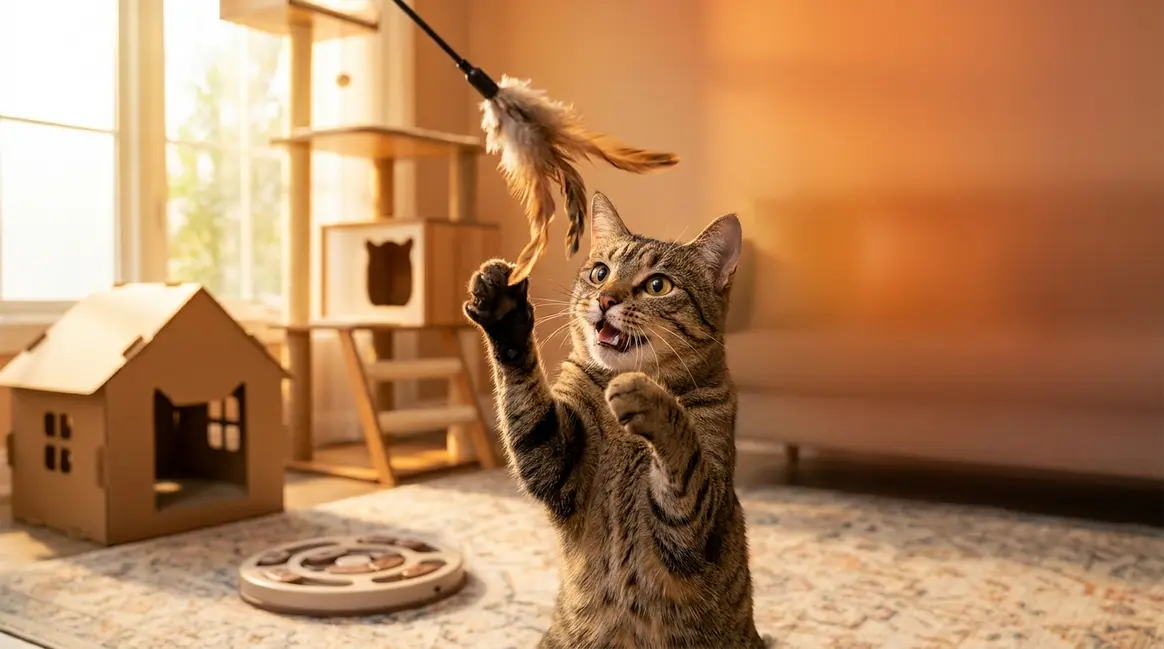
Boredom is a significant driver of compulsive behavior in cats. Replacing a standard food bowl with a puzzle feeder — a device that requires the cat to work for their food — provides mental stimulation that can redirect compulsive energy. Our team consulted with veterinary behaviorists who note that even 10–15 minutes of food-puzzle engagement per day can meaningfully reduce anxiety-driven behaviors.
3. Vertical Territory (Cat Trees and Wall Shelves)
Cats feel safer when they can observe their environment from height. A lack of vertical space is a documented stressor in indoor cats. Adding a cat tree, wall-mounted shelves, or a window perch gives your cat a safe vantage point — reducing the ambient anxiety that fuels overgrooming.
4. Scheduled Interactive Play (Two Sessions Daily)
Interactive play with a wand toy or laser pointer mimics the hunt-catch-kill cycle that cats are wired for. Veterinary consensus indicates that two 10–15 minute play sessions per day — one in the morning, one in the evening — significantly reduce stress-related behaviors. The key is consistency: irregular play is less effective than a predictable routine.
5. Hiding Spots and Safe Retreats
Every cat needs at least one private hiding spot where they feel completely safe. A cardboard box, an igloo bed, or a covered cat condo works well. When a cat is overwhelmed, having a retreat prevents the anxiety from escalating into compulsive behavior.
6. Calming Supplements (Under Veterinary Guidance)
Several veterinary-approved calming supplements — including L-theanine, alpha-casozepine (found in products like Zylkene), and certain B-vitamin formulations — have evidence supporting their use in anxious cats. Always discuss supplements with your vet before starting, as interactions with existing medications are possible.
7. Environmental Stability and Routine
Cats thrive on predictability. Feeding at the same time each day, keeping the litter box in a consistent location, and minimizing loud noise or sudden changes reduces baseline anxiety. If a life event (new pet, move, new baby) has triggered the overgrooming, maintaining as much routine as possible in other areas helps the cat re-regulate.
Home Remedies That Are NOT Safe — What to Avoid
Some commonly suggested “home remedies” can cause serious harm. Avoid these:
- Applying human anti-itch creams or hydrocortisone: Human topical steroids are absorbed through cat skin and can cause toxicity. Never apply any human skin product to your cat without explicit veterinary instruction.
- Essential oils (tea tree, lavender, eucalyptus): Many essential oils are toxic to cats — even diffused in the air. Tea tree oil in particular can cause neurological symptoms and liver damage. Keep all essential oil products away from cats.
- E-collars (cones) as a long-term solution: A cone prevents licking but does nothing to address the underlying cause. Using one for more than a day or two without treating the root problem is not a solution — it is a temporary barrier that causes additional stress.
- Dietary changes without veterinary guidance: Switching foods randomly in an attempt to identify a food allergy can make a proper elimination diet harder to conduct later. Any dietary change for suspected allergies should be supervised by a vet.
What Happens at the Vet: The Diagnostic Exclusion Process
Understanding what your vet will do makes the visit less daunting and helps you prepare. The diagnostic process for overgrooming typically follows a structured exclusion sequence:
Step 1 — Flea and Parasite Check: Your vet will examine the coat for flea dirt, live parasites, and signs of mite infestation. A skin scraping (a quick, painless procedure where a small amount of skin surface is collected) may be performed to check for mites under a microscope.
Step 2 — Skin and Coat Assessment: The vet will examine the pattern, location, and nature of hair loss. A Wood’s lamp (ultraviolet light) may be used to screen for ringworm.
Step 3 — Blood Panel and Urinalysis: To rule out systemic causes of pain or discomfort — including hyperthyroidism, kidney disease, and urinary tract issues — a blood test and urine sample are often requested.
Step 4 — Allergy Testing or Elimination Diet: If parasites and systemic illness are ruled out, allergies become the primary focus. Environmental allergy testing may involve intradermal skin testing. Food allergy investigation requires a strict elimination diet — feeding a novel protein (a protein your cat has never eaten before, such as rabbit or venison) for a minimum of 8–12 weeks with no other food sources. This is the only reliable way to diagnose a food allergy in cats, and it requires strict discipline from the owner.
Step 5 — Behavioral Assessment: Only after all physical causes are excluded will a vet or veterinary behaviorist diagnose Psychogenic Alopecia. At this stage, treatment may include anti-anxiety medication (such as fluoxetine or clomipramine), behavioral modification, and the enrichment strategies outlined above.
Across clinical studies, the consistent finding is that this stepwise exclusion process — not guesswork — is what leads to successful treatment (Royal Canin Veterinary Academy; PetMD).
Red Flag Signs: When to Book a Vet Appointment Today
Some signs mean you should not wait. Contact your vet the same day if you observe any of the following:
- Open sores, bleeding, or weeping skin in the overgroomed area
- Bald patches that appeared suddenly (within 24–48 hours)
- Your cat is licking one specific spot obsessively and cannot be distracted away from it
- Signs of pain: limping, reluctance to be touched, crying when the area is approached
- Lethargy, loss of appetite, or vomiting alongside the overgrooming
- Skin that looks infected: swollen, warm, foul-smelling, or producing discharge
These signs suggest an acute medical condition — not a behavioral issue — and early treatment leads to significantly better outcomes.
Troubleshooting — Common Mistakes to Avoid
Even well-meaning owners make these two mistakes. Recognizing them early saves your cat weeks of unnecessary discomfort.
Mistake 1: Assuming It’s Always Stress
This is the most common error, and it is the reason The Medical-First Rule exists. Stress-driven overgrooming (Psychogenic Alopecia) is real — but it is far less common than medical causes. Veterinary research consistently shows that the majority of overgrooming cases have a physical, treatable cause. When owners assume stress and skip the vet visit, they inadvertently allow a flea infestation to worsen, an allergy to go untreated, or an underlying pain condition to progress. The Medical-First Rule is simple: rule out the body before addressing the mind.
If you’ve already tried enrichment strategies and pheromone diffusers for 4–6 weeks with no improvement, that is a strong signal that the cause is medical — and a vet visit is overdue.
Mistake 2: Trying to Stop the Behavior Without Treating the Cause
Putting a cone on your cat, spraying bitter-tasting deterrents on their fur, or using distraction techniques addresses the symptom — not the cause. A cat with flea allergy dermatitis will find a way around a cone, or will redirect the licking to another area. Worse, the physical frustration of being prevented from self-soothing can increase anxiety in a cat that is already stressed.
The correct sequence is: identify the cause → treat the cause → support recovery with enrichment if needed. Skipping straight to behavior modification is like putting a bandage on a wound that needs stitches.
Frequently Asked Questions
How do you fix overgrooming in cats?
Fixing overgrooming starts with identifying and treating the underlying cause — not suppressing the behavior itself. If a medical cause is found (fleas, allergies, pain, infection), your vet will treat it directly with appropriate medication. If the cause is behavioral (Psychogenic Alopecia), treatment combines anti-anxiety support — such as Feliway diffusers, puzzle feeders, scheduled play, and sometimes prescription medication — with environmental enrichment. Attempting to stop the licking without addressing the root cause typically fails and can increase your cat’s stress. Most cats improve significantly once the underlying trigger is resolved.
Should I be worried if my cat is overgrooming?
Yes — overgrooming that causes visible bald patches, thinning fur, or skin damage warrants a vet visit. Cats do groom frequently (30–50% of waking hours), so occasional licking is normal. However, when grooming results in hair loss, redness, or broken skin, something is wrong. Research from the JAVMA (2006) found that 76% of cats assumed to be overgrooming due to stress actually had an underlying medical condition (PubMed/JAVMA). Catching the cause early prevents the skin damage from progressing to open sores or secondary infections.
Can cat overgrooming be cured?
Yes, most cases of cat overgrooming can be completely resolved once the underlying cause is correctly identified and treated. If the issue is medical, such as a flea allergy or skin infection, targeted veterinary treatments usually stop the itching and allow the fur to regrow. For behavioral causes like Psychogenic Alopecia, a combination of environmental enrichment, routine stabilization, and sometimes anti-anxiety medication can successfully eliminate the compulsive behavior over time.
How long does it take for cat fur to regrow?
Once the underlying cause of overgrooming is treated and the licking stops, you can expect to see new fur growth within a few weeks. However, it typically takes two to three months for the coat to fully fill in and return to its normal texture and length. During this recovery period, it is essential to continue any prescribed treatments or environmental enrichments to prevent a relapse of the compulsive behavior.
Conclusion
For worried cat owners, understanding cat overgrooming causes comes down to one principle: start with the body before you address the mind. Research shows that 76% of overgrooming cases have a medical root cause (PubMed/JAVMA, 2006) — making veterinary assessment the single most important first step. The most effective approach combines early sign recognition, location-based diagnostic thinking, and a structured vet exclusion process covering parasites, allergies, pain, and infection.
The Medical-First Rule is not about dismissing stress as a cause — it is about ensuring your cat gets the right treatment for the right cause. Psychogenic Alopecia is real, but it is a diagnosis of exclusion. Every physical cause deserves to be ruled out first, because treating a food allergy with a pheromone diffuser will never work — and your cat deserves better than that.
If your cat has bald patches, red skin, or is licking obsessively at their belly or legs, book a vet appointment this week. Bring notes on where the hair loss is located, when it started, and any recent changes in your household. That information will help your vet reach a diagnosis faster — and get your cat comfortable again sooner.

Dave King
Cat owner and writer at Mad Cat Man.